

A few years ago, we obtained the HVE Level 3 certification, an official recognition that demonstrates our commitment to more environmentally friendly agriculture.
This certification highlights demanding practices in terms of biodiversity preservation, responsible water resource management, reduced use of inputs, and product traceability.
Through this approach, we reaffirm our determination to combine agricultural performance with long-term respect for the environment.
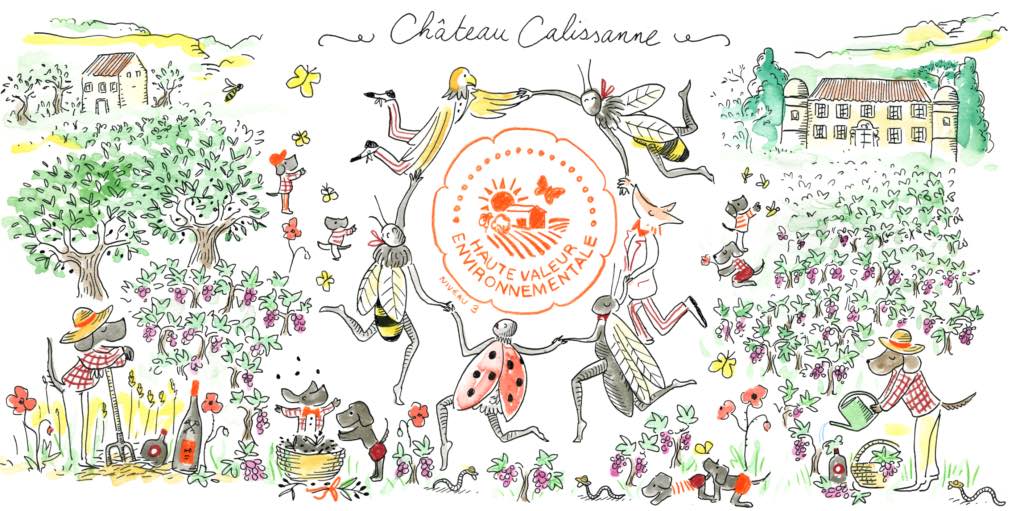
Obtaining this certification promotes species diversity within the vineyard, improves vine health, and contributes to the quality of the grapes, thereby enabling the production of high-quality wines that are respectful of the environment. Learn More
Sweetness at Château Calissanne
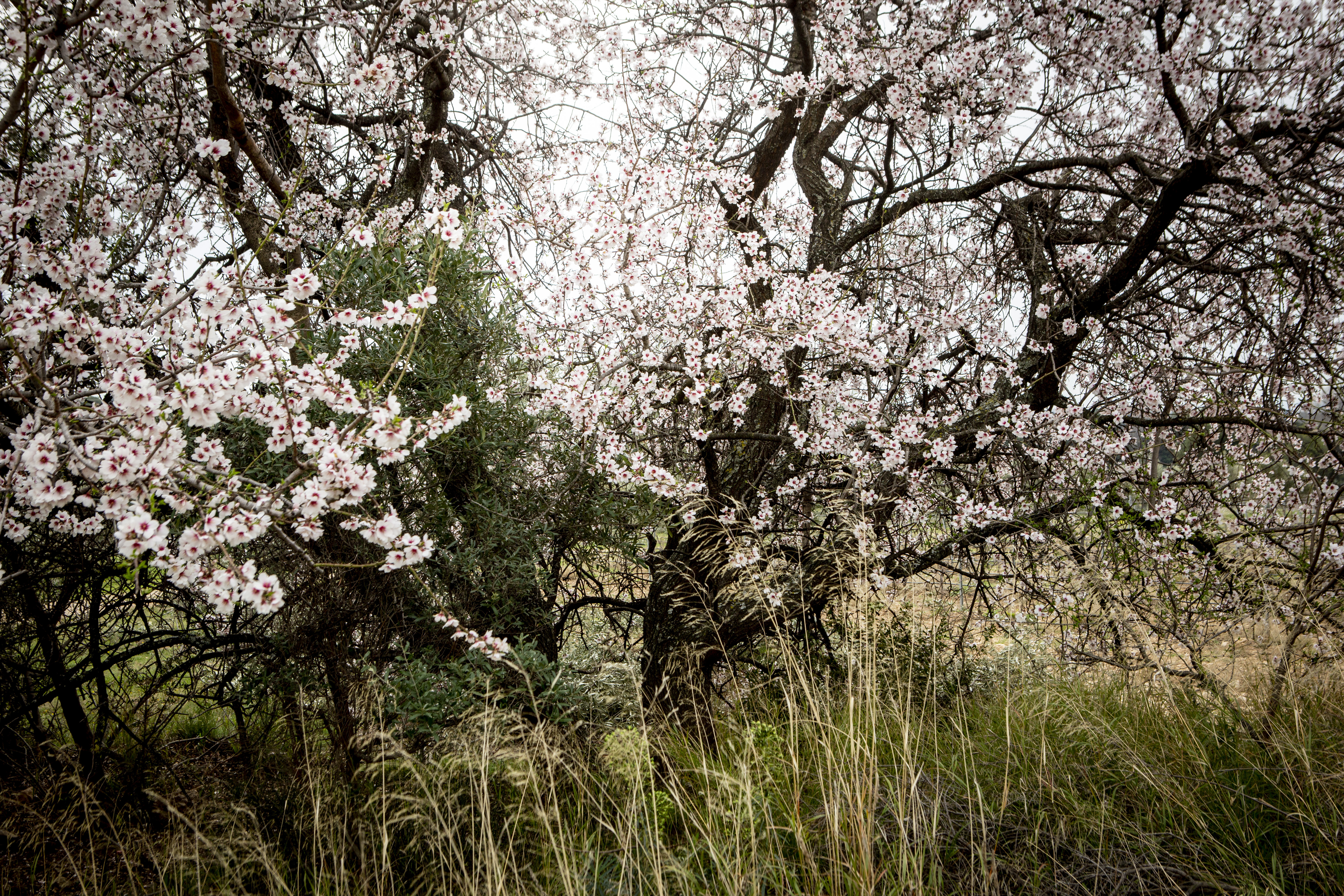
History fondly tells that the famous Calissons d’Aix, a delicacy made from almond paste, are said to originate from a hillside at Calissanne that was once planted with almond trees. The name “Calissanne” already appears in a charter dating back to 1152. Without this sun-drenched hillside, the Calisson might never have existed…
Fauna and Flora
A Peaceful Life…
A Haven of Tranquillity for Mediterranean Fauna and Flora
Today, it is the vine and the olive tree that have made this vast estate renowned, scattered with Mediterranean plant species and serving as a natural refuge for wildlife.
Within this scrubland of kermes and white oaks, boxwood, juniper, rosemary, thyme, hillside mimosa, rockrose, spiny broom, and wild lavender, partridges, rabbits, and wild boar thrive along the rocky cliffs.
This mineral garrigue, rich in Mediterranean flora, is home to numerous bird species, including bustards and the Bonelli’s eagle, a protected species.
There is also a healthy population of roe deer, including some rare albino individuals.
All these animals coexist naturally, and we actively protect this territory through careful monitoring by wardens and private hunting, which allows us to manage and regulate wildlife populations responsibly.
Beehives for a Provençal Honey
Calissanne also produces its own honey. More than 150 beehives are installed at the foot of the cliffs, across three named locations on the upper reaches of the estate, nestled among the garrigue and rocky escarpments.
We carry out only one vine treatment per year and use a product bearing the “Bee-Friendly” label.
Over the past three years, the planting of large-scale crops around the vineyards has ensured rich eco-diversity, fostering the vitality and good health of the bees.
Bonelli’s Eagle
Pairs of Bonelli’s eagles are the true stars of our territory. And like all stars, they are closely watched—their appearances are rare, and their nesting sites even more so! They dislike paparazzi-like observers and prefer to take refuge in the hidden corners of the Calissanne hillside.
Sheep
Transhumance was once a long-standing tradition at Calissanne, and we have chosen to reconnect with these ancestral practices.
While it can no longer truly be called transhumance or that great journey—since the sheep now arrive by truck—they nevertheless live peacefully in the heart of nature, just as they once did.
The 2,000 sheep arrive at the beginning of spring and remain for four months, grazing the southern plains or the northern plateaus of the Calissanne estate.
These scenes evoke the timeless image of sheep flocks in Provence.
They convey a powerful message of harmony between nature and animals, and of respect for the well-being and good health of the sheep.
Truffles at Calissanne
The truffle—rabasse in Provençal—the “black diamond,” is a mycorrhizal fungus that requires a host tree, in this case the kermes oak at Calissanne. As a hypogeous fungus, it develops underground in the estate’s limestone soils, which are poor, shallow, and well aerated.
Truffles thrive in climates similar to those suited to the vine: cold winters without severe frosts, mild and humid springs, and hot, dry summers.
Donkeys
Provence would not be as beautiful without donkeys! The writings of Daudet remind us of this…
Our donkeys no longer carry loads; they are simply here to remind us of the charm of Provence. Contemplative and a little nostalgic, our two donkeys, Cigale and Fourmi, have lived on the estate for over fifteen years and continue to delight us.
“Tout autour du village, les collines étaient couvertes de moulins à vent. De droite et de gauche on ne voyait que des ailes qui viraient au mistral par-dessus les pins, des ribambelles de petits ânes chargés de sacs, montant et dévalant le long des chemins ; et toute la semaine c’était plaisir d’entendre sur la hauteur le bruit des fouets, le craquement de la toile et le Dia hue ! Des aides-meuniers… Le dimanche nous allions aux moulins, par bandes. Là-haut, les meuniers payaient le muscat. Les meunières étaient belles comme des reines, avec leurs fichus de dentelles et leurs croix d’or. Moi, j’apportais mon fifre, et jusqu’à la noire nuit on dansait des farandoles. Ces moulins-là, voyez-vous, faisaient la joie et la richesse de notre pays.”
Excerpt from Letters from My Windmill by Alphonse Daudet